
Letters to the Organic Waste Bin
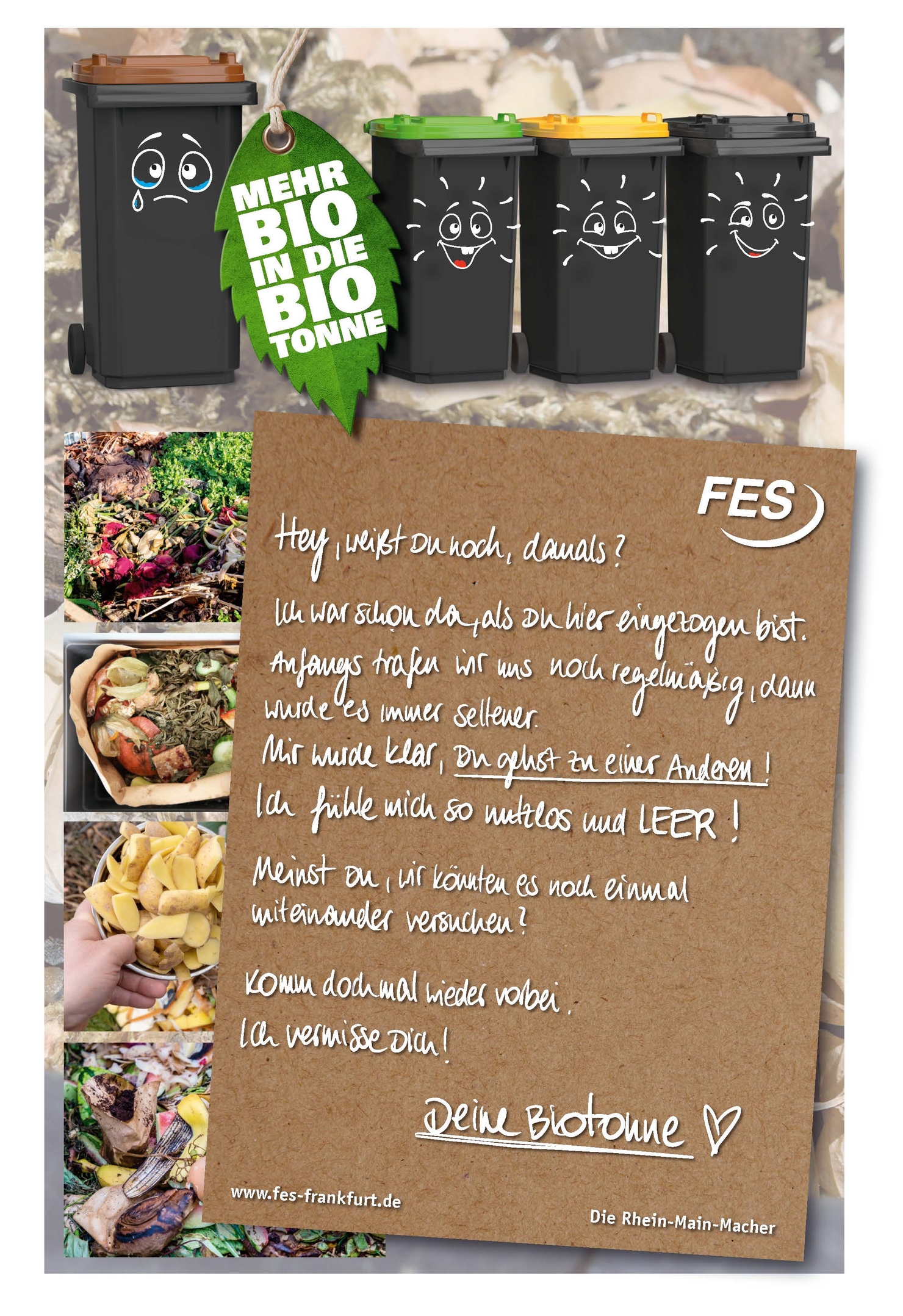
Dear Biowaste Bin,
Yes, we were happy when we moved in that you were already there. In the following weeks, we developed a close and trusting relationship with you. We burdened you with a lot of garden waste during the clearing of the garden areas, but you handled this (fulfilling) task very well and never complained! Over the years, we have grown older together, our relationship has strengthened, but it has also entered calmer waters. Since we try to avoid waste, we do not interact quite as much anymore, but we still value you greatly and can cope well with your occasional odor. Sometimes—when you smell a little strong—we give you a shower, and then you shine again and are just like old times. So don’t worry, we remain loyal to you and promise to continue taking good care of you! And if your lid ever bothers you again… get in touch with us, we always have an open ear for you.
Your best friends
***
Dear Biowaste Bin,
I found your letter in my mailbox, but I think you’ve mistaken me for someone else.
When I moved in here, shortly after my birth in autumn 1964, you probably weren’t here yet. Garbage bins back then were made of steel, small and cylindrical. The garbage men—so it was said at the time, and they were 100% men—rolled them skillfully by the lid handle to the garbage truck and back. When you arrived, I actually had almost nothing to give you. Our problem is more that many people give you things you weren’t meant to handle. Then the garbage men don’t want anything to do with you either, and the problem gets stuck with us. What can you do when someone simply doesn’t want to know? I can understand that it frustrates you as well, but maybe that’s why our area isn’t the best place for someone like you.
Best regards from an unknown person
***
P.S.: Recently, I had visitors from America. They were very surprised because over there, organic waste is ground in a kitchen disposal unit and flushed with the wastewater to the treatment plant, where biomass is made. You don’t even have to save and carry out the waste, and the indoor trash bin barely smells. One can have many opinions about Americans, but when it comes to convenience, they really know what they’re doing.
***
Externer Link zu #HappySummertime2021 Great idea, dear
Externer Link zu #FES-
Externer Link zu #BiowasteBin. In our honorable house in the
Externer Link zu #Ginnheimer
Externer Link zu #Pfeiferstrasse, you cannot resist the admirers – we all appreciate your inner values – and remain loyal to you, promised.
Externer Link zu #OrganicWaste
Externer Link zu #CityCleaning
Externer Link zu #Frankfurt
Externer Link zu #FrankfurtMain
Externer Link zu #FrankfurtamMain
Externer Link zu #SmallestMetropolisInTheWorld
Externer Link zu #BioWaste
Externer Link zu #MoreBioInTheBin
Sie sind als Gewerbekunde registriert
Sie haben einen Gewerbekundenaccount. Bitte melden Sie sich im FES-KundenPlus Portal für Gewerbekunden an. Dort finden Sie alle Funktionen und Informationen für Gewerbekunden.