
Our history and cooperation with the FES
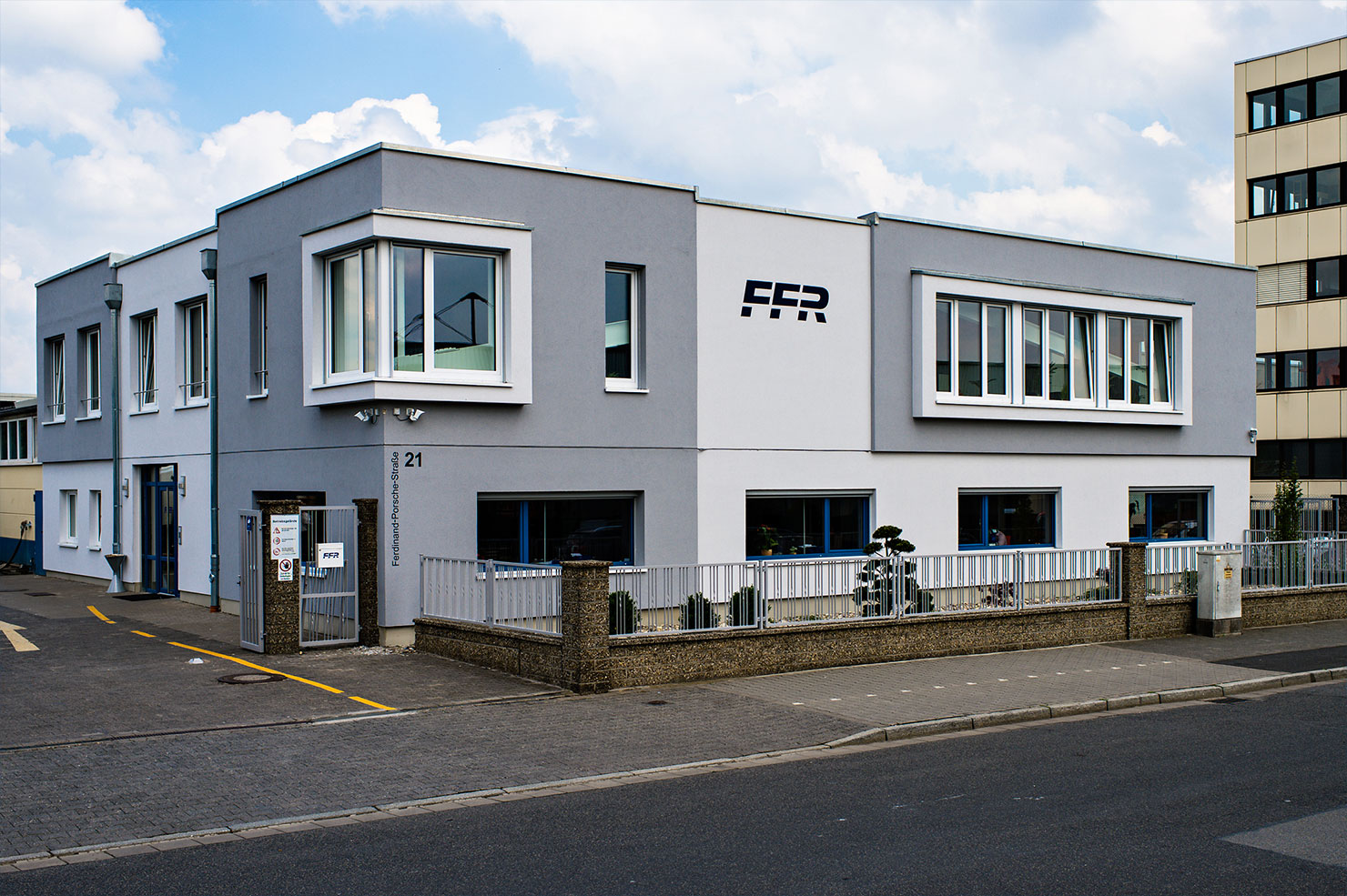
For over 50 years, we have been taking care of clean streets, squares, and pathways in Frankfurt. In 1963, we were founded as Frankfurter Fußweg-Reinigung. Today, we operate as FFR GmbH, a subsidiary of Frankfurter Entsorgungs- und Service GmbH (FES).
The initially cooperative partnership with FES GmbH in winter services was expanded in 1990 to include cleaning services. At that time, we also took over traffic management and water supply for major events in Frankfurt and the Rhine-Main region for the first time.
In 2000, our portfolio was expanded again: Since then, we have been responsible as a professional company for traffic safety and traffic light technology within the city and on federal roads and highways.
In 2003, FES and FFR further intensified their cooperation: individual service areas were expanded and completely new areas, such as green space maintenance, were added.
In 2006, the decision was made to become a subsidiary of FES GmbH. This combines decades of experience, specialized know-how, and modern technology for the benefit of both companies' customers.
In 2009, we expanded our operational area to Mainz and Wiesbaden and opened a branch in Wiesbaden.
In 2014, we opened another branch in Darmstadt.
In 2018, the Wiesbaden branch was relocated.
With combined technology and expertise, we now provide state-of-the-art services for private, commercial, and municipal customers.
For more information, visit Externer Link zu www.ffr.de.
Modern technology
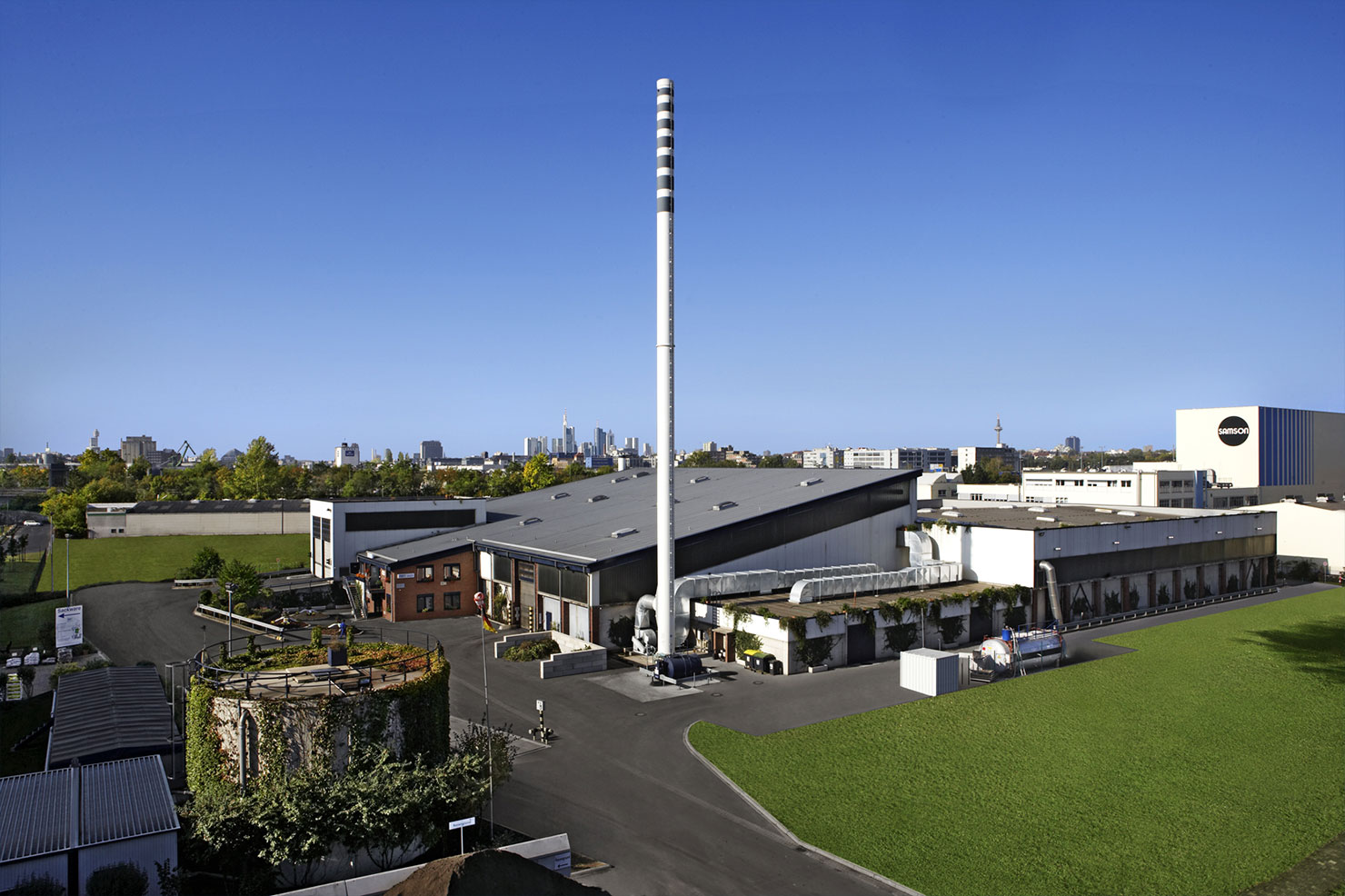
Since its commissioning in 1999, all private and commercial bio-waste from the Frankfurt urban area has been processed here.
State-of-the-art compost production and energy generation: Through a combination of fermentation and composting technology, the plant produces both high-quality compost soils and biogas, which is converted into electricity and heat. The generated energy is used both to operate the plant and to feed the public supply network.
The following waste is processed in the plant:
- Bio-waste from Frankfurt households, collected separately via the organic waste bin.
- Green waste arising from landscaping or public green space maintenance.
- Commercial waste from fruits and vegetables from food processing companies.
With this plant, Frankfurt has a closed-loop system for biological waste. The compost is distributed nationwide under the brand name Humerra. You can also purchase it in the RMB shop.
More information at Externer Link zu www.rmb-frankfurt.de
Our range of services
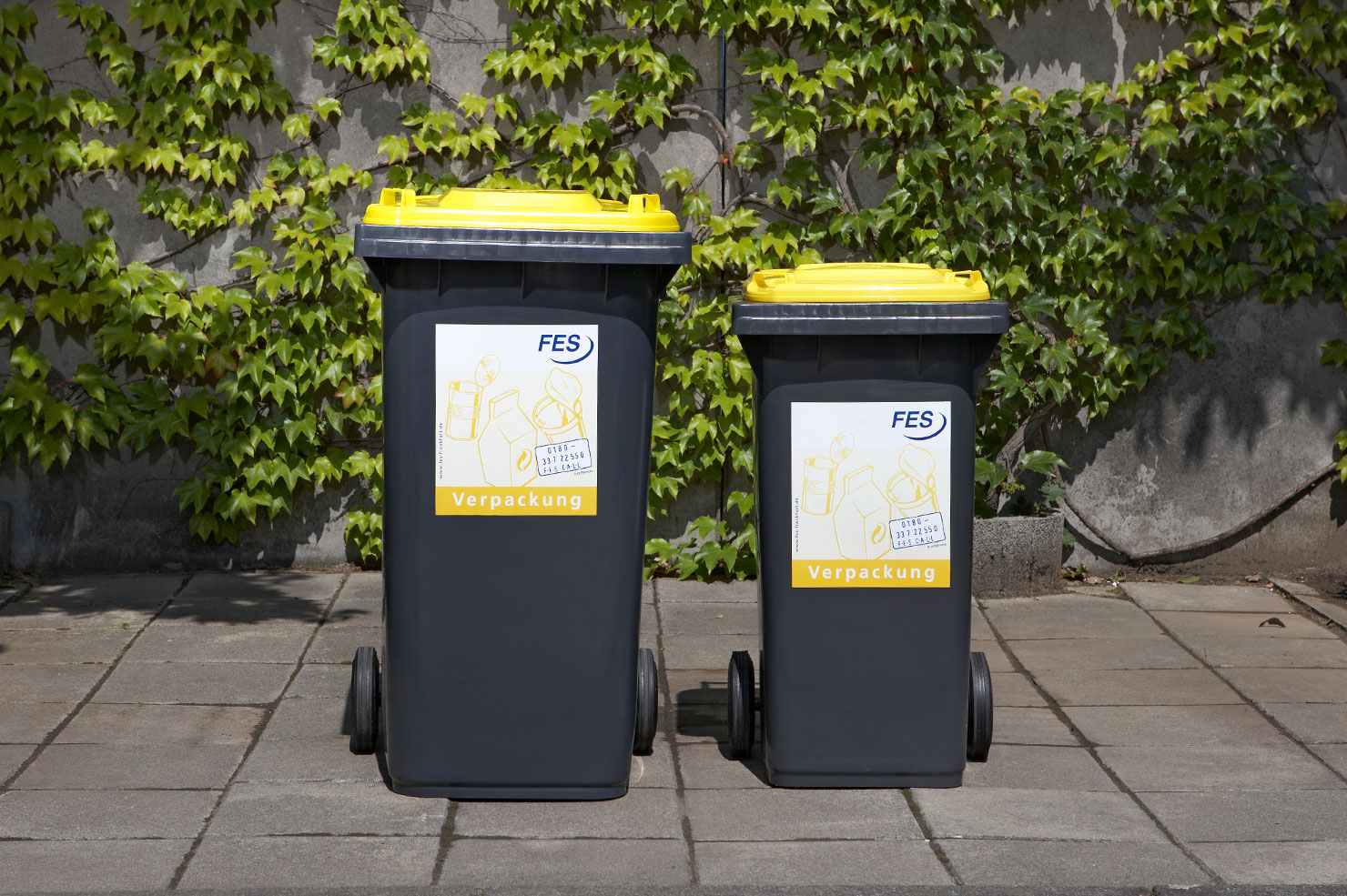
We collect all packaging waste with the Green Dot and comparable licensing marks.
In Frankfurt am Main, collection is carried out using yellow waste containers. Collection takes place every 14 days. You can find the collection dates in the Externer Link zu waste calendar for Frankfurt.
In Kelsterbach, we carry out residual waste collection as well as paper and bulky waste collection. Here is the Externer Link zu waste calendar for Kelsterbach.
Modern and environmentally friendly disposal
The former waste incineration plant was extensively renovated from 2004 to 2009 while in operation and converted into a modern waste-to-energy plant – one of the most modern and environmentally friendly facilities in Germany. Since October 1, 2009, the MHKW Waste-to-Energy Plant Frankfurt am Main GmbH has been operating the plant. The shareholders are FES GmbH and Mainova AG, each holding an equal share. And because we are a certified waste management company – and as such are allowed to carry the monitoring mark of the German Waste Management Association (EdDE) – safety and environmental protection are guaranteed. These high standards can of course only be ensured through constant monitoring. In addition, a comprehensive inspection is carried out annually with subsequent certification by external experts.
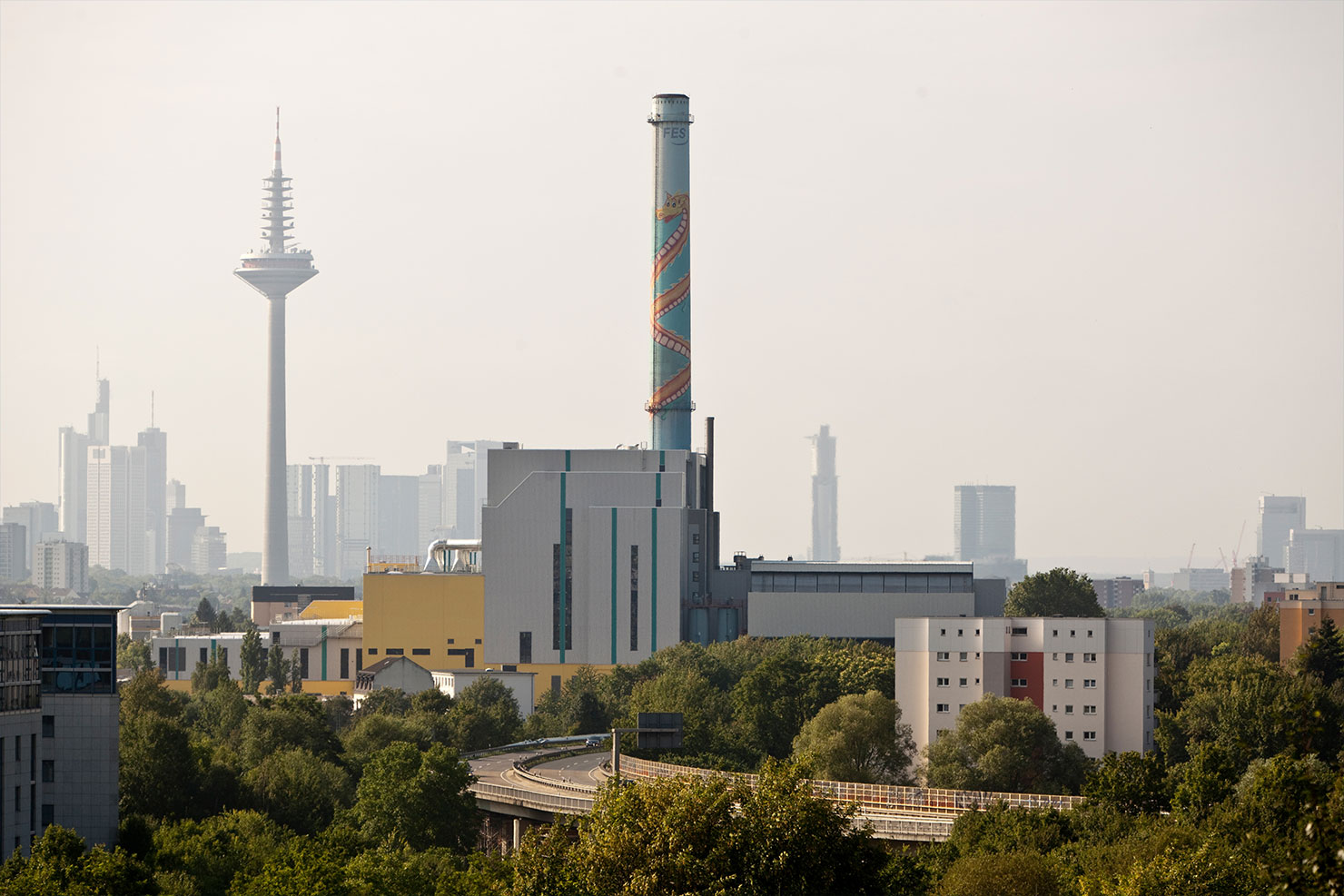
The Frankfurt waste-to-energy plant
Since its construction in the 1960s, the steam generated by the incineration of household waste at the waste incineration plant (AVA) has been supplied to the adjacent combined heat and power plant. It has always been used there to produce electricity and district heating for the Nordweststadt district of Frankfurt.
In 2005, this capability became more significant: since the Technical Instructions on Municipal Waste (TASi) came into effect on June 1, 2005, all household waste – the contents of the grey bins – must be thermally or biologically treated before disposal. This marked the end for all conventional landfills in Germany. In the future, household waste from the Hochtaunuskreis, Maintaunuskreis, and other municipalities in the Rhine-Main area also had to be incinerated at AVA Nordweststadt. In the long term, the expansion and modernization of both facilities became inevitable.
To optimally implement this development, the owners of the facilities – the City of Frankfurt am Main and Mainova AG – decided to join forces. The operators of the AVA and the CHP plant – FES GmbH and Mainova AG – began planning the operation of a state-of-the-art waste-to-energy plant – the MHKW Frankfurt.
The MHKW Frankfurt not only supplies district heating to Nordweststadt but also to the new district "Riedberg." By using household waste as fuel for energy generation in a state-of-the-art plant, we contribute significantly to reducing carbon dioxide emissions. Furthermore, valuable resources such as oil, coal, and natural gas are saved. In addition, the modernization of flue gas cleaning reduces environmental impacts to a minimum. The MHKW Frankfurt am Main remains owned by the City of Frankfurt am Main and Mainova AG. Its operation will also continue to be jointly carried out by MHKW Frankfurt am Main GmbH, a company of FES GmbH and Mainova AG.
Facts:
- The waste-to-energy plant can incinerate 525,600 tons of waste per year.
- The volume of delivered waste is reduced to 10–12% and the weight to 25% during incineration.
- The plant produces 1,576,800 tons of steam per year, which is used for electricity generation via combined heat and power. In addition, we supply district heating to 30,000 households.
- At FES’s own slag processing facility, the resulting slag is treated and subsequently used as landfill cover.
- Using waste as an energy source saves the annual combustion of around 140 million liters of heating oil.
- The pollutant contents of the continuously monitored flue gases are well below the legally prescribed limits.
More information is available at Externer Link zu www.mhkw-frankfurt.de.

| Name | Address |
|---|---|
| MHKW Müllheizkraftwerk Frankfurt am Main GmbH |
Heddernheimer Landstraße 15760439 Frankfurt am Main |

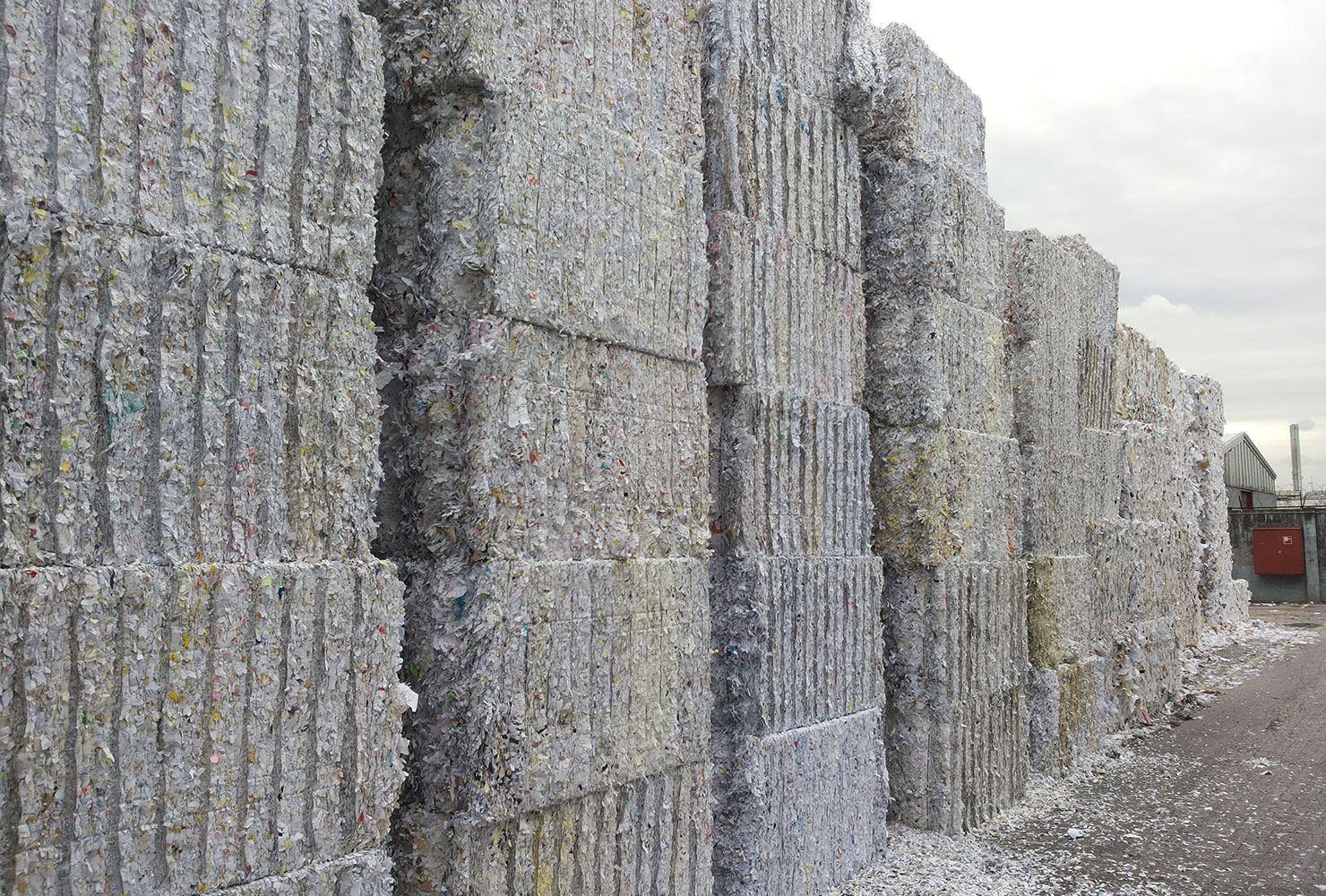
Recycling waste paper sensibly
Not all waste paper is the same — we deal in a wide variety of qualities and types. Thanks to our many years of experience, we are able to respond to the individual requirements of our customers and buyers. As a reliable partner, we offer you perfect service, sales security and fair prices.
We operate throughout Europe — in close cooperation with KG Ludwig Melosch Vertriebs-GmbH & Co. From transport to customs clearance and shipping, we take care of proper recycling.
Waste paper is not only used in paper mills for the production of new paper, but also serves as an important raw material in the construction industry — for insulation materials and plaster.
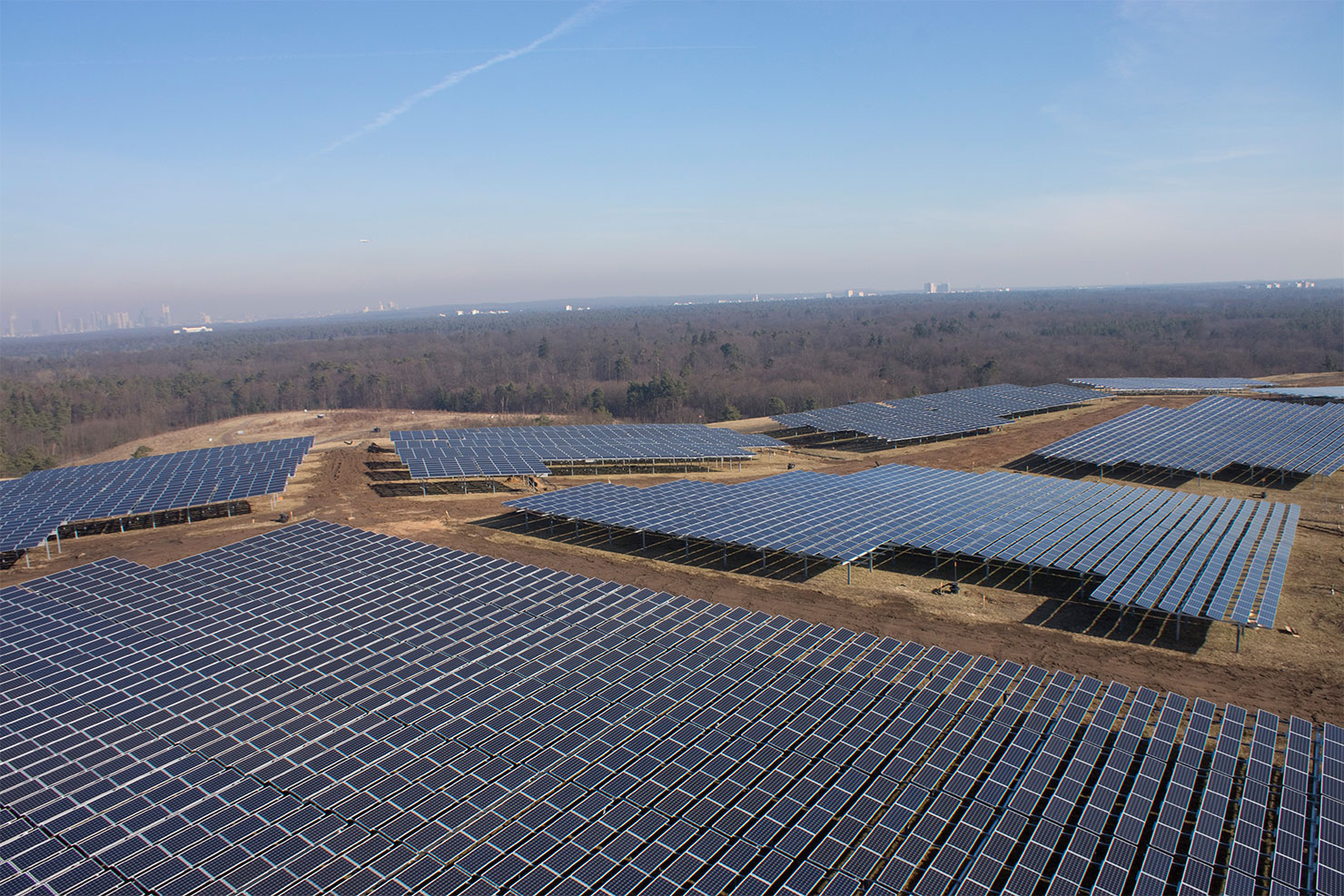
For environmentally friendly energy
At the landfill site in Dreieich-Buchschlag, Frankfurt household waste was deposited from 1968 to 1992. As early as the mid-1990s, the City of Frankfurt am Main, which is responsible for the recultivation and aftercare of the landfill, together with the state enterprise Hessen-Forst, the owner of the site, began considering how the landfill could be used in a meaningful and practical way in the future.
In spring 2011, the state enterprise Hessen-Forst put the area on the landfill body out to tender for the construction and long-term operation of a solar park. In autumn 2011, we at FES, together with the municipal utilities of Dreieich, were awarded the contract.
Subsequently, within a few weeks, Sinusstrom GmbH, acting as the general contractor on our behalf, built the solar park. In time for the deadline of 31.12.2011, the overall system was made ready for acceptance in accordance with the EEG. At the end of March 2012, the solar park was connected to the supply network of the Dreieich municipal utilities. Electricity feed-in began on 01.04.2012. All solar modules are mounted on a standardized substructure and individually elevated so that sufficient air and light can reach the grass layer beneath the modules.
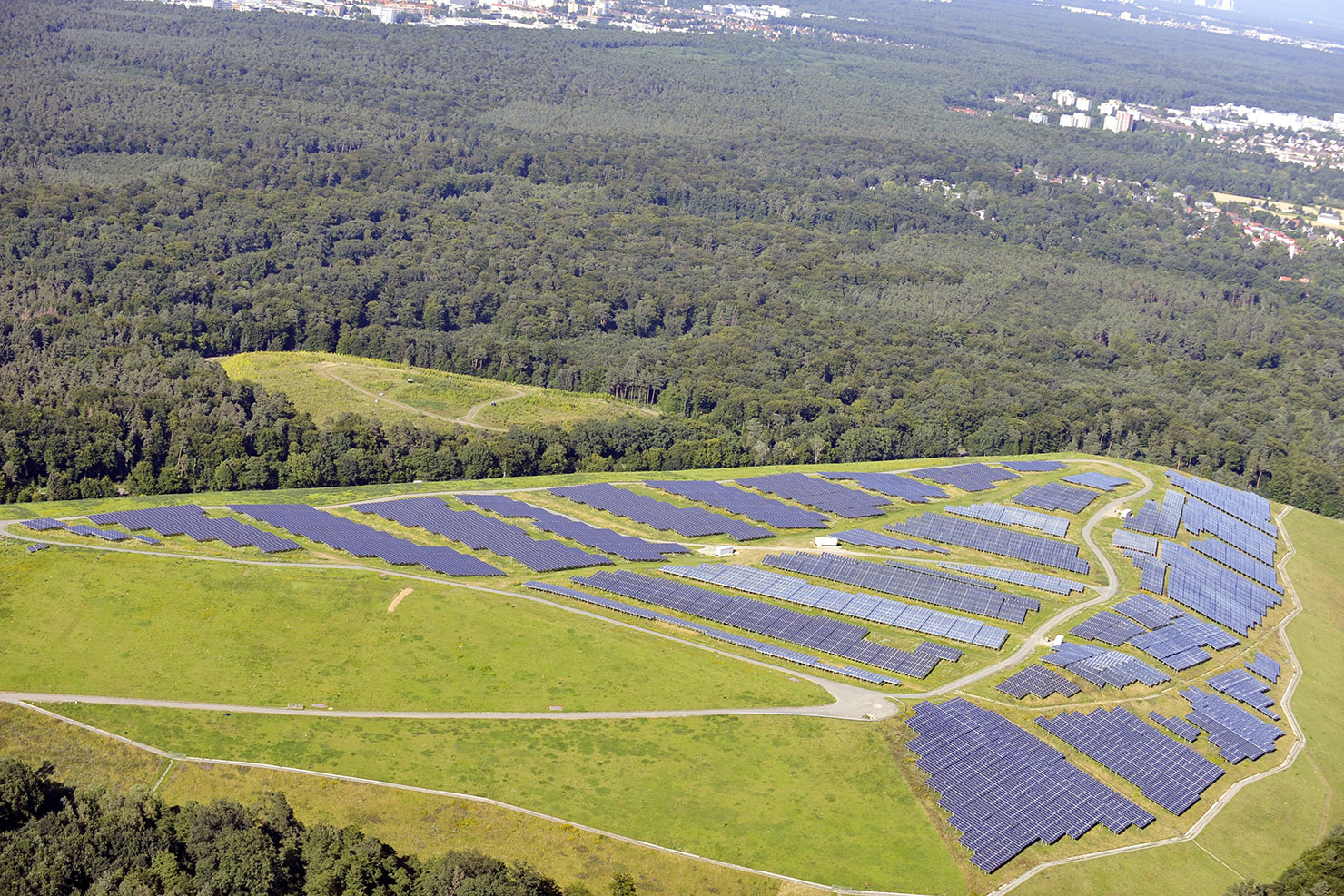
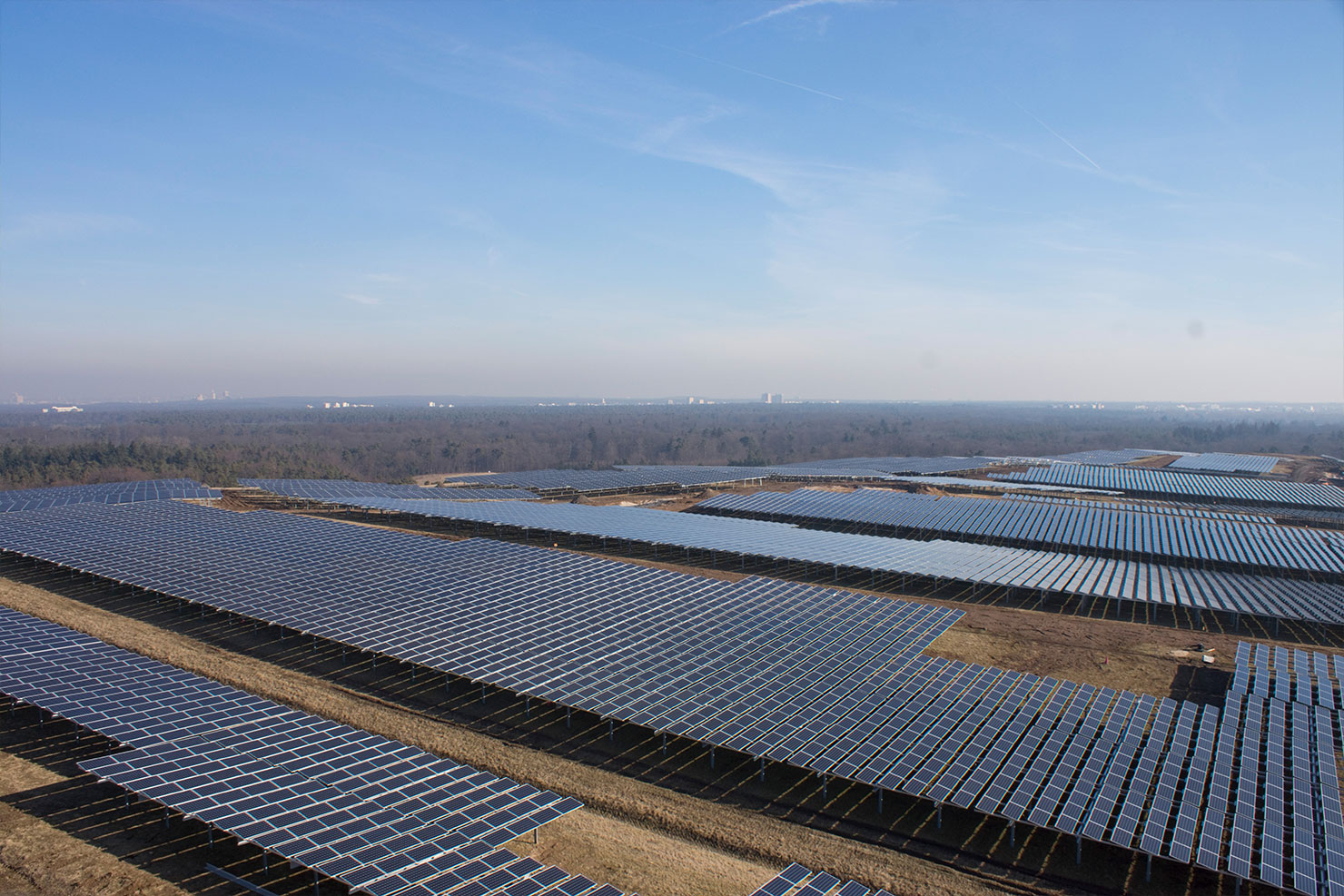
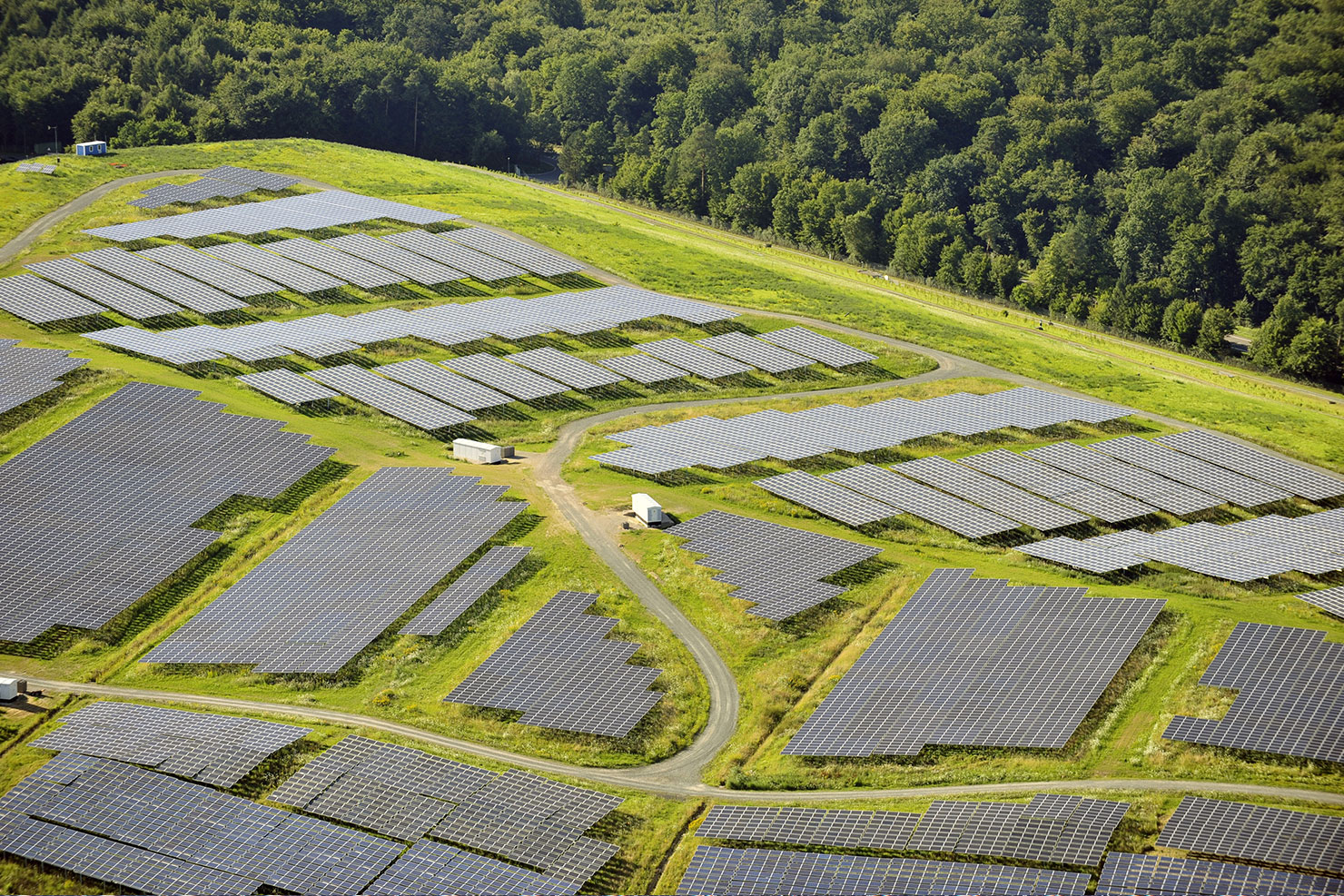
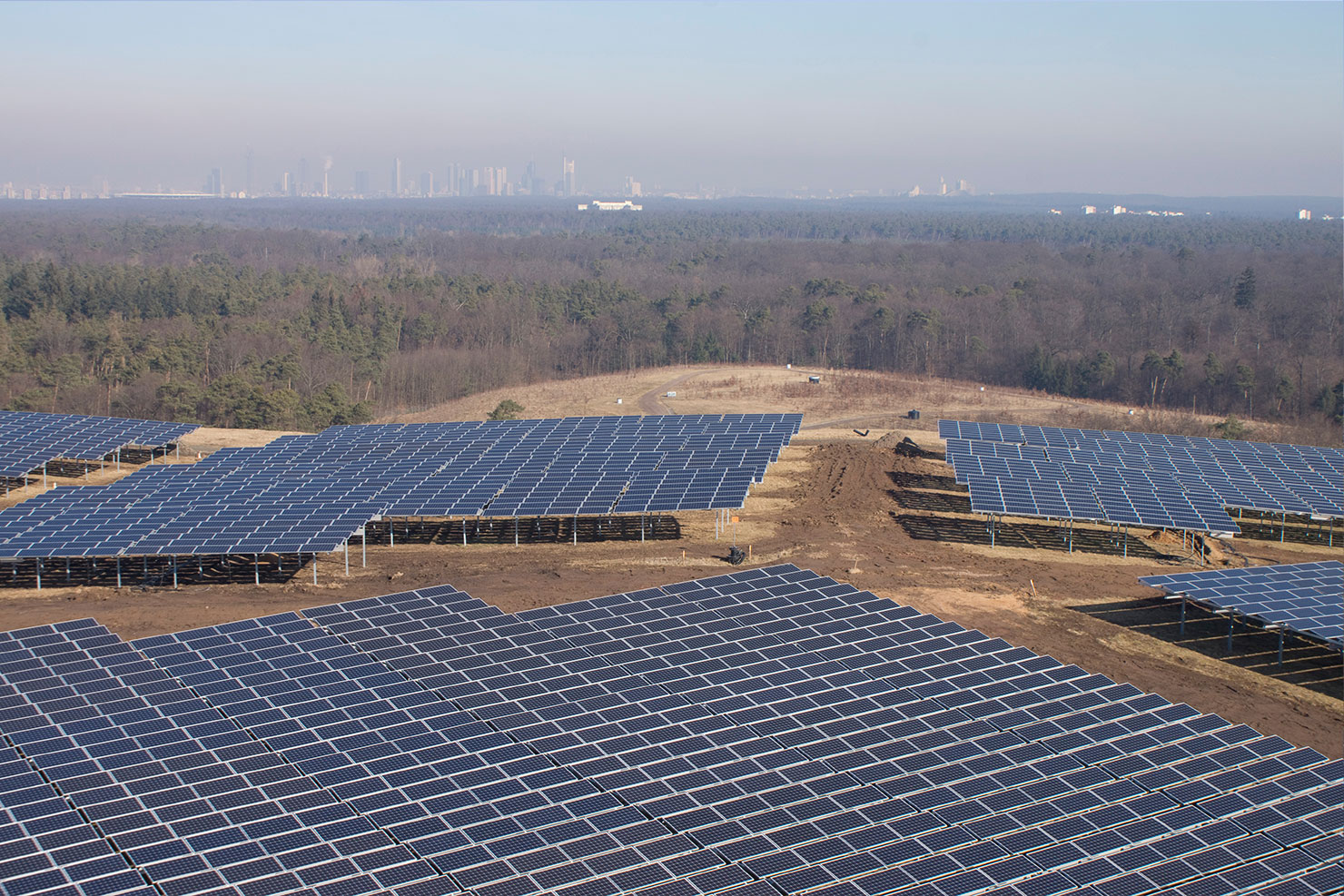
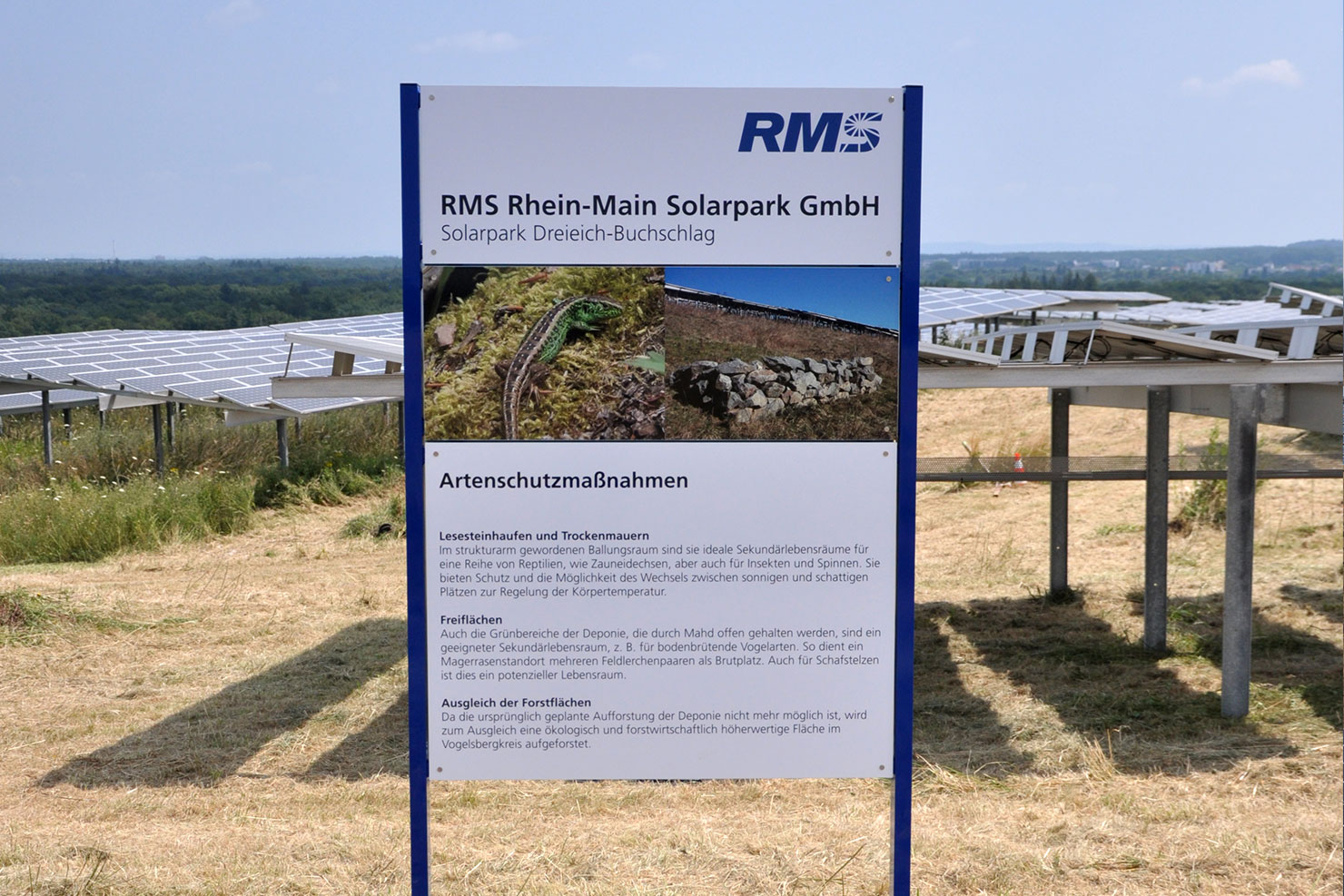
The operator of the Dreieich-Buchschlag solar park is Rhein-Main Solarpark GmbH (RMS). The shareholders of RMS are Stadtwerke Dreieich GmbH and us, FES GmbH, each holding equal shares.
As the local energy supplier, Stadtwerke Dreieich contributes not only its expertise in electricity but also the necessary facilities and distribution networks. At the same time, it is expanding its regional capacities for the generation of environmentally friendly electricity.
In addition to RMS, several municipal utilities and energy cooperatives from the Rhine-Main region, the Walther-Gebhardt Group, as well as numerous citizens, are involved in the project as owners.
For us, the solar park is an important investment in the environment and sustainability. With it, we can support the city of Frankfurt am Main in achieving its climate goals.
Further information can be found at Externer Link zu www.rhein-main-solarpark.de
Sie sind als Gewerbekunde registriert
Sie haben einen Gewerbekundenaccount. Bitte melden Sie sich im FES-KundenPlus Portal für Gewerbekunden an. Dort finden Sie alle Funktionen und Informationen für Gewerbekunden.